My friend Mark Gunther died at home on the North Side on Nov. 9 at age 76 after a long battle with pancreatic cancer.
The following Monday I went to Chicago Barn Dance Company’s weekly event in the great ballroom at the Irish American Heritage Center on the Northwest Side and gave this short speech during a brief lull in the action. It went something like this:
“Very few of you know of Mark Gunther, but he is the reason we’re all here tonight.
“Nearly 50 years ago, he and his friend Fred Feild had the idea of starting up a square dance in Chicago. Fred was in violin making school. Mark was an attending physician at Cook County Hospital, and they met at an old time music jam session. They’d been inspired by the square dancing they’d seen at the annual West Virginia State Folk Festival in Glenville. And the first dances here in Chicago were very small – and very irregular. Mark hauled the sound equipment, formed bands, identified venues and determinedly guided the Chicago Barn Dance Company through its early years. Long after Fred moved away in 1983, Mark was the mainstay of the dances. Without him I doubt it would have survived.
“In an online memorial posting Rhys Jones called Mark ‘the greatest fiddler I have ever heard … the greatest to ever put bow to strings.’ That’s high praise given that Rhys himself is among the greatest living old time fiddlers. As a boy in Chicago, Rhys followed Mark around with a tape recorder studying the drive, the bounce and the subtlety in Mark’s fiddling.”
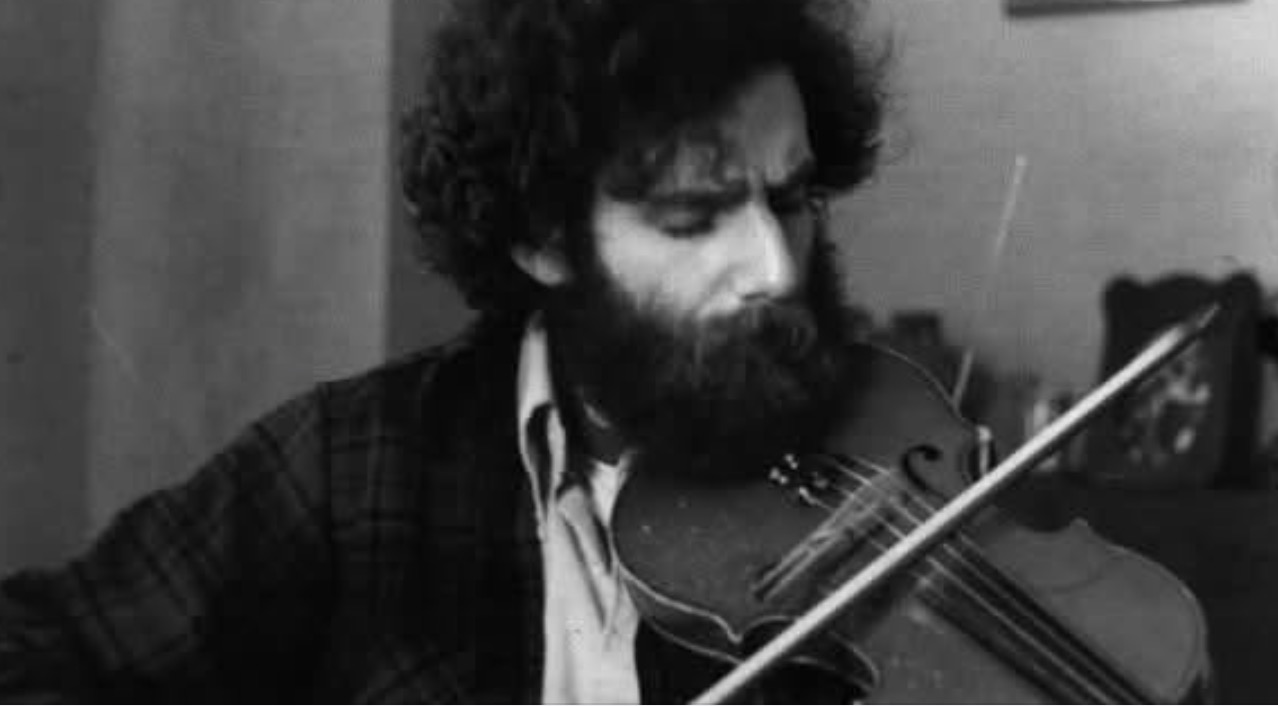
Rhys wrote:
With Fred Field, Mark founded the Chicago Barn Dance Company, and kept it going for years through sheer force of will, determination, and unwavering vision. The Chicago Barn Dance Company still stands today, fifty years later, with hundreds of musicians and dancers coming together every Monday night.
Many people shaped and molded the traditional music and dance community of the Midwest, but Mark stands apart from others. What he built utterly changed my life, my parents lives, and the lives of most of the musicians and dancers that I grew up with. There are entire families that wouldn’t exist without him, and endless dances where people laughed, met, parted, loved and lived beautifully. Marriages were made, children were born, music was played and learned. And the dancing? Oh, the beautiful, beautiful dances. I grew up falling asleep on piles of coats on a stage while Mark Gunther played, and played, and played.
Mark Gunther was, in almost every way, responsible for the entire fabric of my childhood. His vision of traditional music and dance continues to determine the course of my life, I am the fiddler that I am because Mark Gunther lived. He was a community builder, a founder, a gentle dancer, and a fiddler beyond compare.
“Most of you don’t know Mark because he left the scene decades ago. Internal conflicts. Grudges. Artistic differences. He was talented and brilliant, but he could be very difficult. Cantankerous, stubborn, opinionated. And he was the first to admit that.
“Many people have picked up the torch that Mark and Fred lit – too many to name – and, thanks to them, this scene is now far bigger and healthier that those of us who were around in the early years could ever have imagined.”
The ripple effect of this one man’s determination to build an enduring and now thriving community was not lost on me when I learned earlier this year that Mark was gravely ill. Rhys did not exaggerate when he noted all the love affairs, marriages and children that came about because Mark doggedly kept the dance alive when it was small and itinerate.
Now it’s bigger than ever — more than 200 dancers some Monday nights — thanks to those who have carried on, adapted to the times and done the work that Mark did so early on.
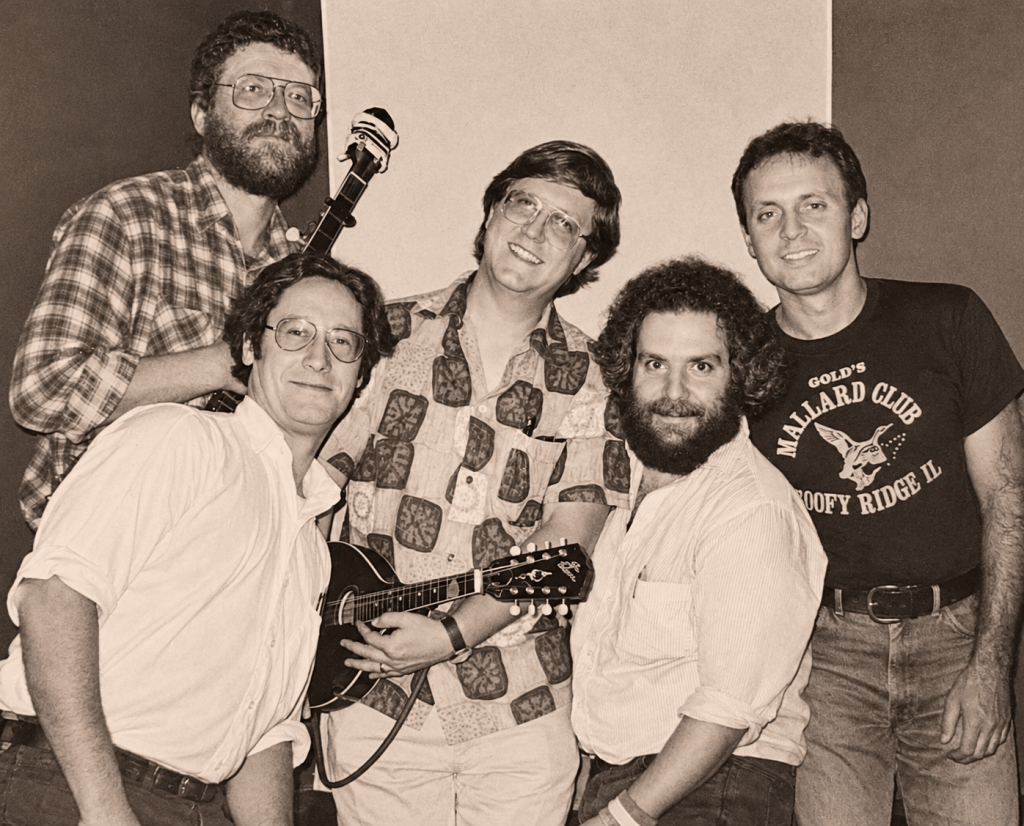
Here’s a goofy photo from the early 1980s. Left to right that’s Fred Campeau, John Terr, Chirps Smith, Mark Gunther and Fred Feild. Feild is alive and well in Arizona, and we’ve been reminiscing by email.
For reasons unknown, Mark didn’t get into the recording studio for more than a few tunes. I’m hoping to scrounge up some of the many field recordings made of him and make them available. For now here is vintage video on YouTube.
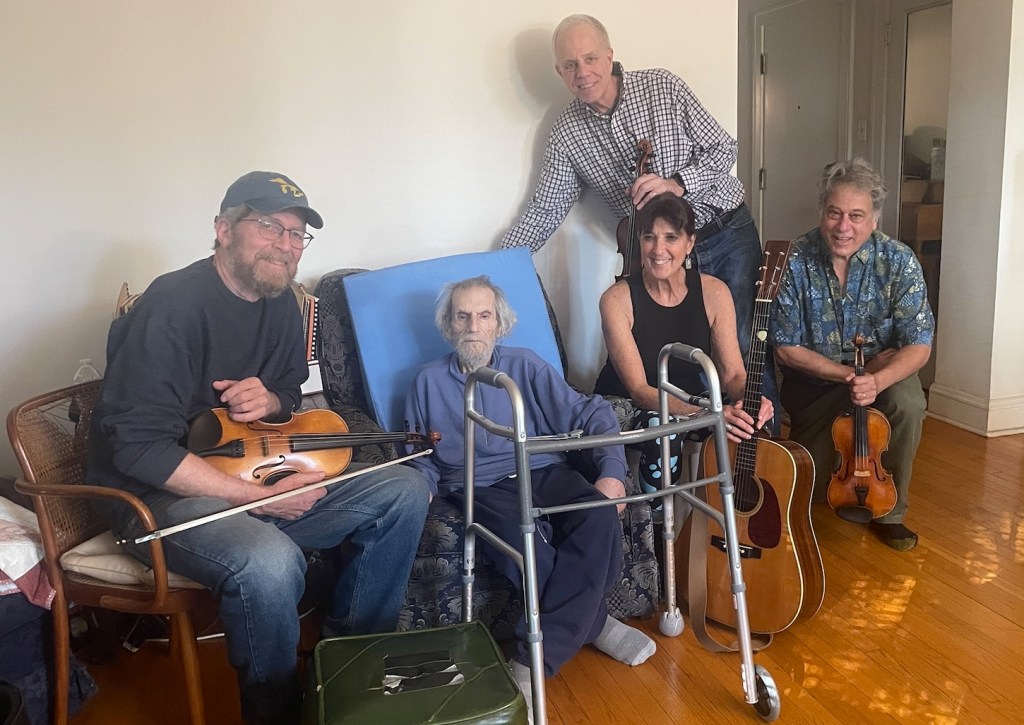
And here’s perhaps the last photo of Mark, taken several days before he died when a group of us went to play fiddle tunes for him.


Leave a Reply