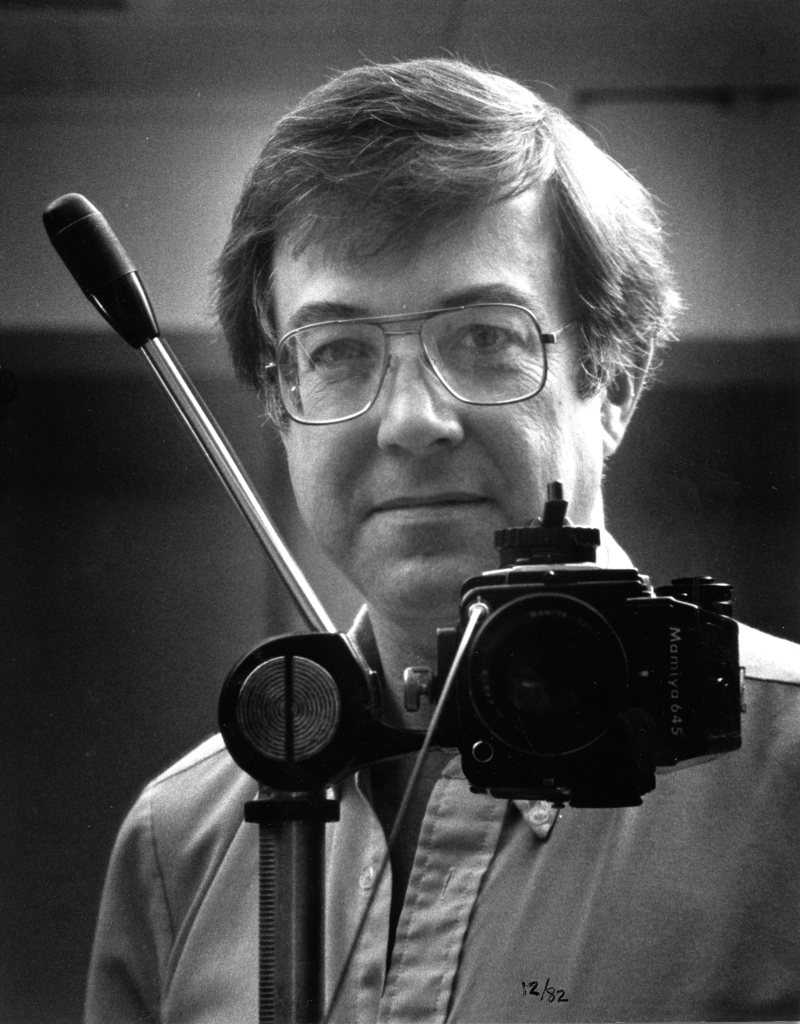
My father, Jens C. Zorn, died on Jan 5, 2026.
Here is the link to the post I wrote the for Picayune Sentinel for the Thursday after he died, containing a description of his final hours.
Here is the link to his formal obituary.
Here is the link to Jens Zorn Sculpture, an archive of his works in metal.
Here is the link to the video slide show, accompanied by music he made with his friends, that ran prior to the speeches at his Celebration of Life in the Pendleton Room of the Michigan Union on March 14, 2026.
Here is the link to slide show plus the speeches delivered at the Celebration of Life.
And below is the edited transcript of the Celebration of Life along with an assortment of comments and tributes that were submitted electronically. (If you’d like to add thoughts, write to ericzorn@gmail.com)
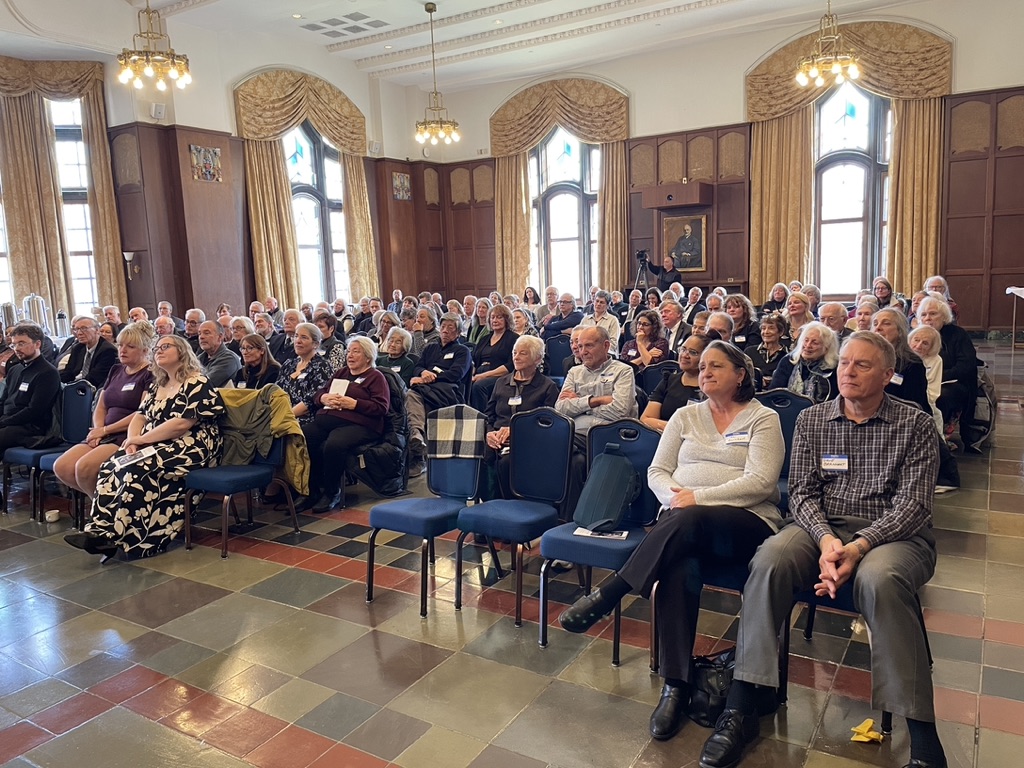
Eric Zorn
I want to thank everyone for being here. I’m Eric Zorn. What we’re going to do is have some people come up here and say a few words in memory of Jens Zorn, my father.
Joachim “Quin” Janecke
Jens Zorn was a colleague of mine and a friend. Jens was a remarkable person. We all know that.
I once translated for him, from German into English, a set of postcards and letters written shortly after he arrived with his parents from Germany in 1934 at age three. These were communications written by Emmy Noether to Jens’ father Max Zorn. Both were eminent mathematicians. Both were refugees from Germany. Emmy had arrived in the United States a year earlier. The purpose of this mail exchange was primarily to find a permanent position for Max at an American university.
Jens pointed out to me with some amusement that his father made the wise decision not to accept an offer from the University of Tomsk in the Soviet Union where Emmy Noether’s brother worked.
Jens and I saw each other often during the brown bag lunches of retired physics professors Tuesdays at noon. These lunches ended when the COVID-19 pandemic hit in 2020.
Jens made numerous helpful comments to me with regard to a recent book that I put together of World War II letters home from my three older brothers who served in the German army and did not survive. He insisted that the book included a translation into English.
We interacted numerous times over the years on Facebook He contributed many words of wisdom. In fact, my last interaction with Jens, took place on Facebook in December 2025, only four weeks before he died. He commented on a picture which I had submitted with an exceptionally nice remark. But he didn’t respond anymore to the letter which I wrote to him afterwards.
I saw Jens for the last time in February 2024, two years ago, I visited him along with his close friend, Adele Laporte. He looked a little frail, but he was sharp as ever. He carried the burden of the health issues of his beloved wife, Frances.
I want to conclude by mentioning a special letter I received from the Detroit Institute of Art some years ago. This letter included the picture of Matisse painting on the left side, and on the right side it showed the words “A contribution has been made to the Detroit Institute of Art in memory of Christa Janecke, a warm, gracious woman who remains in our hearts, by Jens Zorn.” Christa was my wife who had died two years earlier. Jens knew her well.
This is the sort of thing that Jens did. I will never forget it.
Stephen Forrest
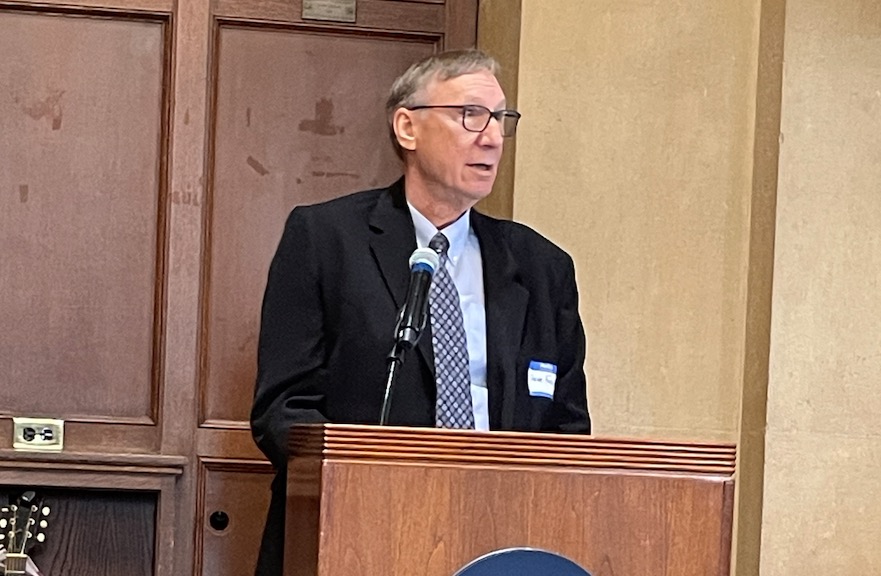
Good morning to all of you on this celebration of Jens Zorn’s life and many contributions to the University of Michigan physics and arts communities. I have been asked by Eric to comment specifically on Jens’ scientific contributions which is quite an honor, as Jens made several important contributions to atomic physics in addition to being a wonderful human – what is known as a mensch! And it is fitting that his contributions be noted. After all, Jens became the historian of the Physics department, so we now are tasked with including his contribution to that history.
Jens was a member of the storied AMO (aka the Resonance) group in a physics department almost completely dominated by high energy physicists. A few of the other members of that club were John Ward, Bill Williams, Peter Franken, and maybe a bit on the periphery, my own advisor Mike Sanders, Gabi Weinriech, Mike Bretz, Len Sander and Tom Witten. I know I have left out others, but at the time I was only a graduate student trying to navigate that difficult experience while closeted away in the Sub-basement (and sometimes the sub-sub-basement…is there yet another even deeper, as yet undiscovered basement?) in Randall.
But even at that time, although I never took class from Jens, I knew him as a constant, kind and caring ubiquitous presence who descended to the depths of Randall always with a camera in hand to chat and to snap pictures of us grad students at work.
Interestingly, one of those photos showed up in a recent article in Michigan Engineer of me and fellow grad student Sam Polanco in 1977.
Jens’ own area of research was the spectroscopy of atoms. He used an unusual technique introduced with George Chamberlain at Yale in the early 1960s.
This was called the “atomic beam electrostatic deflection method”. After leaving Yale, in 1962 he came to U-M where he spent his scientific career in our physics department until his retirement in 2009. At U-M he continued his work on investigating atomic structure using what had become known as “molecular beam resonance spectroscopy” – a technique in which he played a central pioneering role, and for which he was recognized by being elected Fellow of the American Physical Society in 1973 (interestingly the same year as Dick Sands and Art Rich; we do have a distinguished faculty here at U-M!). In fact, the first such experiments with magnetic resonance of atomic beams was developed by Rabi at Columbia immediately prior to WWII.
The basic idea is that a beam of atoms prepared in a particular quantum excited state are passed through magnets to select a desired subset of the atomic states at a detector downstream It is sort of a cross between the famous spin-selective Stern-Gerlach experiment and molecular spectroscopy. With this technique, Jens and his many students (24 in all over a period of 39 years, many of whom have gone on to distinguished careers of their own) revealed the excited state multipole and polarization properties of many atomic species such as He (with Dave Crosby), alkalis Na, K, Rb, and Cs and high molecular weight atoms such as Th, with much more complex structures.
This work has significantly deepened our knowledge and appreciation of the structure of matter at the atomic level.
Much of his work was in developing complex molecular beam spectrometers. In looking at his papers, many delve into the details of how the magnets and other instrumentation was designed and constructed, and how well they delivered the very high precision data on atomic structure. It seems that there is a straight line from his development of spectrometers to his focus in later years on developing beautiful metal sculptures honoring the major accomplishments of other Michigan physicists. And even the broader community such as the Faculty Women’s Club sculpture outside of Michigan League.
Indeed, his technical and artistic careers have been intertwined with his interest in history from the very beginning. I think it is this combined interest that made him such a good scientist and educator.
I would just like to close with a personal story with Jens in my own life. As I mentioned at the beginning, Jens was a very welcome presence in my graduate student life, dropping in to take pictures and chat. I had a pretty rough time as a grad student at U-M in the 70’s, and it was Jens, and Mike Bretz and Tom Witten who would submerge into the sub-basement to check on me from time to time.
That made all the difference, leading eventually to my graduation, which was never assured!
But I lost touch with Jens after graduate school, and didn’t connect with him until I returned to U-M as a faculty member in 2006. Then again, he would occasionally drop into my West Hall office and chat with me about the history of the physics department, an interest I shared with him. I also was very excited about the Zorn sculptures between Randall and West Hall. They reminded me of the extraordinary role that our department played in bringing modern physics to the US in the 30s and beyond.
So, when I began writing my first textbook on Organic Electronics in 2015, it was natural for me to turn to Jens to help me with the cover art. I didn’t want the usual cover one often finds on technical books that show a circuit or something representing present, but also transient, images of current discoveries. I was looking for something more abstract and timeless. After a few chats with Jens, he came up with the perfect image that was central to my own research that represented the fundamental quantum phenomenon of spin-orbit coupling – a process that is used in every one of billions of OLED displays today.
It was a masterful drawing that only Jens could have done. I asked him to build me a sculpture of it as well, but he said his hands weren’t cooperating in making sculptures as well as they had in the past, so that work was never realized in 3D.
But the image does grace many bookshelves to this day.
Anyway, fast forward to my second textbook, and again I needed a cover image. So I went right back to Jens when I saw that a sculpture had just been installed along the physics walk, entitled “Elmer Imes: Quantized Rotation”. This was a beautiful joint effort by Jens and David, and it fit perfectly into the theme of my book. I asked them both for permission to use it, and now I am proud to have two books with covers by the same artist, with equally brilliant and beautiful images.
Of course, Jens couldn’t just provide the art, he also had to tell the story of its origins. Elmer Imes was the first black PhD in physics at U-M in 1918, and the first African American to earn a PhD in the US in the 20th century. This was so typical of Jens – to couple science to art to a very human story and experience.
Like everyone here, I will miss Jens greatly. He played such a major role in so many lives. He was a scientist, teacher, artist and most importantly, a very fine human being – he was a mensch indeed!
David Crosby
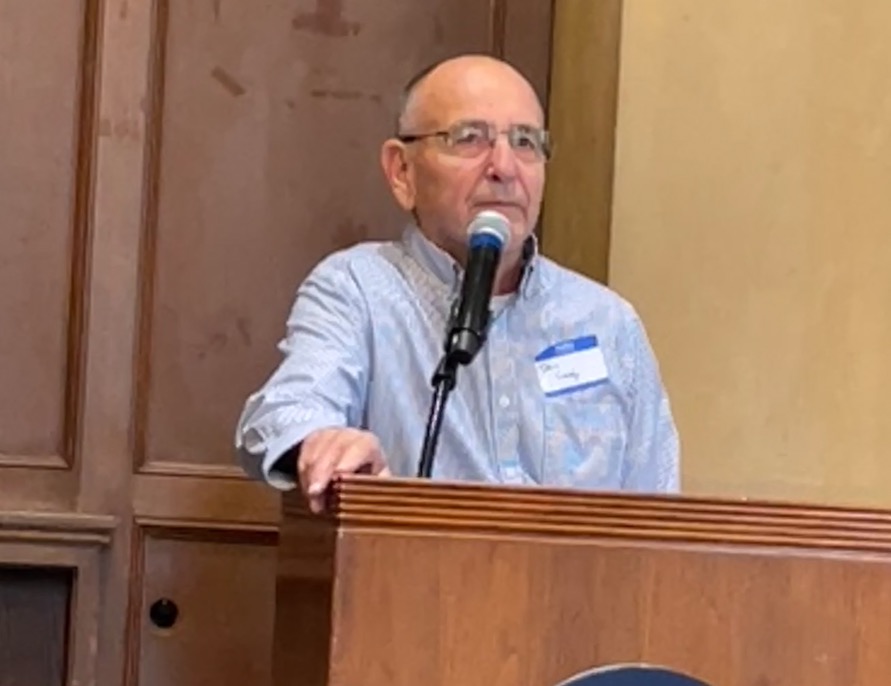
Jens was my friend for 60 years.
We co-authored a short paper in the review of scientific instruments in 1966. In 2024 we collaborated on the Elmer Imes sculpture just mentioned by Steve. It was installed and dedicated on campus.
Ours has been a long and close friendship. Many knew Jens as a gifted teacher. The one award that he displayed in his home office was this one. He was always talking about back-of-the-envelope calculations. And this is the back-of-the-envelope award presented to him in 1992 by his students, for his service to undergraduates and his dedication to undergraduate education.
Along with physics Jens had an abiding interest in music — singing in a gospel group — and in Appalachian culture.
He led a number of Residential College Freshman Seminar trips to Berea College in central Kentucky. I joined him on those. There we met up with a group of Berea students led by Smith Powell, who had been a graduate student here. We then took that mixed group back into the coal counties in eastern Kentucky.
He was always interested in ways to visualize physical phenomena. The first time I met him in his office, I remember seeing small sculptures meant to help visualize electron orbitals.
His more ambitious sculptures are now publicly displayed on campus here, as well at MIT, Stanford and Fisk University in Nashville – That’s the Elmer Imes piece that we duplicated.
He also has pieces installed in Reno, Mexico City and elsewhere. The catalog of his completed work is impressive. The “catalog” of maquettes for pieces yet to be realized is large.
Jens had a passion for the history of physics and for the history of the department he felt so privileged to be a part of for so long. He was concerned that the department would forget its history.
As he was a skilled interviewer, he spent hours interviewing physicists and others in the department. He also amassed a large collection of experimental artifacts, ranging from an optical device shipped to the department in 1898 to Don Glaser’s original bubble chamber.
During his time in the Navy he also became interested in vacuum tubes, an obsolete technology now, and amassed a large collection of those tubes, each of them remembered for its specific purpose, as well as celebrated as visually satisfying small sculptures.
His collections were not all of the technical nature. One day, as I was helping clean out storage cabinets in the kitchen at their home on Dorset Road, I ran across an unopened bottle of homemade wine that I had given him. It was labeled “Merry Christmas, 1973.”
Further excavation yielded a similar but earlier bottle from Tom English, his first graduate student. It might still be there.
As we know, Jens was a skilled photographer. His photos adorn many book jackets. I once asked him how he became interested in photography. He allowed how he was a bit shy in high school, and he found that photography gave him a reason to interact with the pretty girls.
I’ll point out that he did manage to be married to one of those pretty girls for more than 70 years.
Jens was a humble and caring man, and those are the qualities that meant the most to me. He was always willing to lend a helping hand when needed. Over the last decade, I was lucky enough to spend several weeks a year with Jens and Fran.
During those visits, we spent countless hours working out the details and design of future sculptures and making maquettes for those sculptures. We also spent considerable time together in what he referred to as deacquisitioning, trying to place his collections where they might be appreciated.
We also spent countless hours reminiscing, which usually included telling Peter Franken stories.
For those of you who knew Peter, you know that the stories were abundant. These stories were often found to be more interesting if told and listened to while sipping a wee bit of bourbon.
Jens became progressively debilitated, and the last few years were hard on him physically, but to my eye, he remained as sharp as ever. He never lost his devotion to Fran, he always made sure that she was cared for and that her life was the best that it could be as she struggles with dementia. He felt lucky beyond all expectation that Catherine, Kanchia, Felicia and others were there to help them in these last few years. He was sure that life at home would have been impossible without them.
For me, the real essence of Jens showed in that love and devotion to Fran and to those around him. It was with this care that he demonstrated repeatedly what kind of man he was.
He was my good friend, and I miss him every day.
Peter Conzett
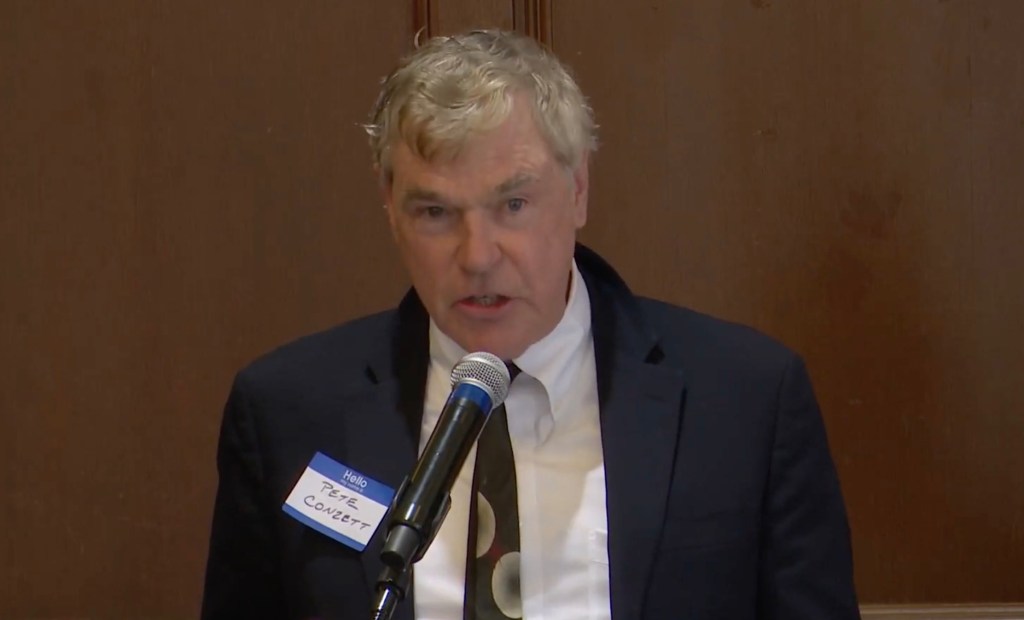
When I was in high school, my best friend’s dad was Jens Zorn
I got to know him and Fran slowly the way you do with the parents of friends. As I hung around the Zorn house, I recognized that theirs was a life very different from any life I’d known or even imagined.
Books were stacked impossibly high everywhere. Jens and Fran were sincerely interested in everything. Whatever this life was, I was transfixed.
I lived with the Zorns during my college summers while Eric interned at far away newspapers.
In those years, I learned a lot from Jens. Some things he taught me directly: Atomic physics, how to work in a dark room, the importance of the history of science in a science education.
Indirectly, he taught me more things than that.
Behind it all was a message more subtle, a message that I eventually took to be a life plan. I didn’t know about the idea of a life of the mind, but Jens showed the way. He did it with very little instructing, just his calm way, by his very openness, by his constant disavowal of pretense, by his remarkable range of interests, he could light the way for a life.
I spent my entire working life teaching physics to young people, hoping to bring an interest in ideas to my students just as Jens brought that interest to me.
What a piece of luck! I got to be Jens Zorn’s friend for 50 years.
Last fall, I visited the remarkable Japanese garden in Portland. If you haven’t been there, I recommend it. It’s a moving and beautiful garden. I found a place that was hard to take a picture of, since nothing that I could frame seemed like a match for how wonderful the garden was. I sent my best effort to Jens, acknowledging it wasn’t a very good picture and asking him why it wasn’t very good.
He wrote back a great answer. He readily but gently agreed that the picture wasn’t very good. Here’s one quote from his lengthy email.
“I think you haven’t decided what you want this picture to be about, and so have included too many features of the garden.”
He was right on the money again. But that’s not news to me or to anyone here, I suspect.
What I know and what this photo exchange makes clear to me is that when it mattered, when I got to be around Jens daily, I knew what I was looking at, I knew what I wanted life to be about, and that was a desire to bring to my students the joy of a life of inquiry and the life of the mind that he had brought to me.
In this way, as the generations go on. He lives on and on.
Kanchia Bruce (with her mother, Catherine Glover)
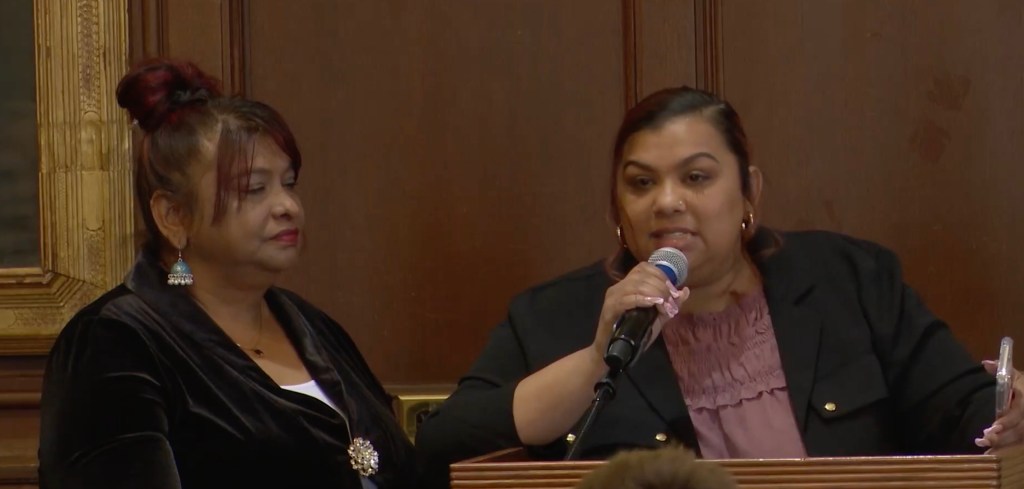
We have been caregivers for Jens and Fran. Jens was a really good man. Today. We are here to honor him and remember all that he has done for everyone, and he has made a very big change in my life. Jens was strong. He was a kind, respectful person. He showed strength in hard times in the ways he cared for people around him, his kindness made others feel welcome, and his respect for everyone showed the kind of person he truly was.
Many of us have memories of Jens that will stay with us forever, whether it was his smile, his words, his encouragement or simply the way he treated people with dignity.
He has a lasting impact on those who knew him. Losing Someone like Jens is never easy, but in our sadness we remember the good moments he shared with us, the positive influence he had on our lives, Jens showed strength, kindness and respect for others, qualities we have carried with us by living with the same kindness and respect he showed. That will help keep his memory alive.
We will always remember Jens, and he will always have a place in my heart.I enjoyed every day of the five years that I’ve had with the Zorns. He was a father that I never had. He showed me good directions. He was helping me finish my GED so I can go to nursing school. He was very good to my family.
But he was also stubborn. We’d have to tell him,”Do this, do that, do this.”
He would say “No, I don’t want to do this.”
But in the end, he would do it.
We took very good care of him on his last days, and we are taking care of his wife as her dementia has progressed. We are doing our best for him, for her. And I will always love Jens, and will always have a part of my heart for him.
Adele Laporte
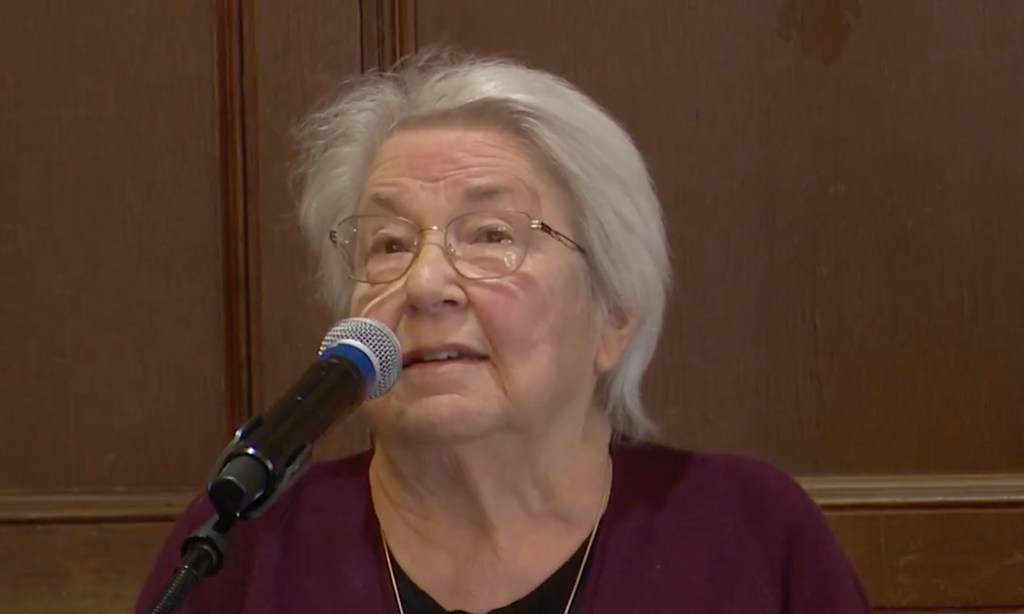
I’m here to offer a few thoughts about Jens as a friend over a long period of time. And as I put together the thoughts I wanted to convey, I now realize, listening to everyone else, that he was a long term friend of an incredible number of people. It was his magic power to be a friend over time.
I want to tell you a little bit about the friendship that we shared. I first met Jens in 1963. I had just returned from a year and a half in Japan with my husband, the physicist Otto Laporte. Jens and Fran had come into the department, which in those days was small, very friendly and family oriented. For instance, if you were pregnant — which I was during that period of time — you got a baby shower. Other parties were very family oriented and very friendly.
Otto and Jens became good friends as well as colleagues, even though Otto was a senior member of the department and Jens was essentially brand new. They were colleagues as well.
When Otto died in 1971 Jens and Fran were incredibly kind, supportive, and — just as they have been described — warm and caring.
My life took a different turn after Otto died. I pursued a legal career and I devoted myself to raising our three daughters, so I did not see Jens and Fran nearly as frequently. We came together again when Jens and I were dealing with dementia in our spouses – him for Fran and me for my second husband, Jim Craven.
Jens reached out to me. And sharing the anxiety, sadness, difficulty of seeing a much loved spouse slip away brought us together again.
Then a somewhat fortuitous event brought us even closer, and that was that I received a phone call from someone I didn’t know, Steve Hiltner, from Princeton, whose father William “Al” Albert Hiltner had been the chair of the Astronomy Department here.
When the physicist Walter Colby died, the Hiltner’s had bought his house, which was just a stone’s throw from Jens and Fran’s House. Hiltner wanted to ask if I knew anything about Walter Colby?
Well, yes, indeed, I did. He had been a good friend. He had started in the department in 1909 and had been a mentor and was responsible for bringing to Michigan some of the great European physicists such as George Uhlenbeck, Otto Laporte and Sam Goudsmit.
Steve Hiltner wanted to make a Wikipedia page for Walter Colby. He thought it was quite unjust that he didn’t have one. I told him the perfect person to consult is Jens Zorn.
We got in touch. But Steve is based in Princeton. So it turned out that it was mostly Jens and I who pursued the project. And as the project went on slowly and fitfully, Jens asked me if I would be willing to talk about my relationship to the department, and he would record it, and I knew, of course, that he was, as others have attested to, the unofficial historian of the department, and had taken great pains to preserve and the memory and document the achievements of the physicists –contemporary as well previous.
So we started out with Jens asking me questions, but pretty soon the questions led to conversations. And after that, the conversations became confidences, and we developed a very close reciprocal relationship founded in shared experiences, some amount of shared history, and of course, Jens’ wonderful ability to be interested in people,
I think that was one of the hallmarks of His life, that he was, he had this warm personality, but he had a genuine, genuine interest in other people, and I think that a part of why became the historian that he was.
We spent a lot of time just in good conversation. A lot of it was fairly serious. We had serious things to talk about.
But on the other hand, Jens could be funny. Jens could be lighthearted. And over the last, I don’t know, three years or so, we began to meet regularly for lunch at their house. And Catherine, one of his caregivers, would sometimes make lunch, and I would bring lunch other times.
And at some point, Jens decided to describe it all as “gruel.” I don’t know why.
We always met at their house, because for the last several years Jens pretty much stayed at home, and even up until the very end, he was always ready for more conversation, for more “gruel.”
When the end was near, he said, “All’s well, that ends well”
And it ended well for him. He lived a life long and full and full of achievements and full of friendships. I thought of him in the end as a friend for all seasons. There was none better.
Johanna Zorn
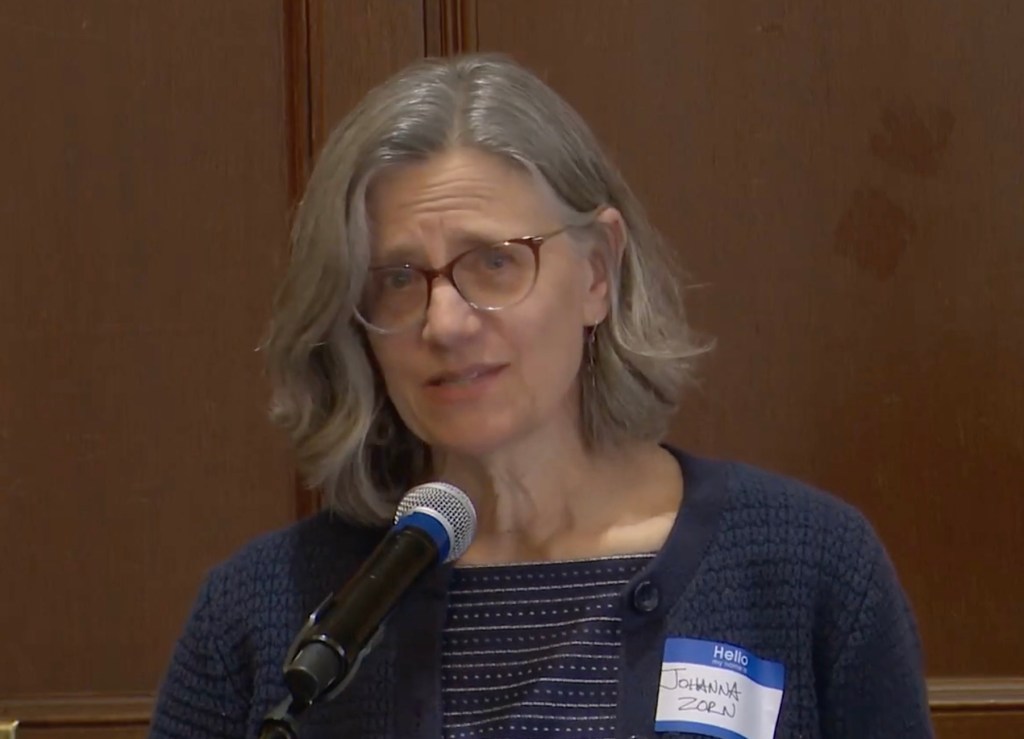
I’m Jens Zorn’s daughter in law, and I know just where Adele and Jens were sitting, because it’s where you always sit when you go to the Zorn’s house, and that is at the kitchen table, where we spent about five hours last night.
When I think about my father-in-law, I think about that table where we spent countless hours together playing board games with the family, eating and sometimes watching TV, but mostly talking, talking, talking. Over breakfast, over lunch, over dinner, and then maybe later, over dessert, maybe ice cream or fruit, definitely, lots of coffee. I could not believe how much coffee the Zorns could drink
until late into the evening,
Jens was hands down the best conversationalist I’ve ever known, and I just loved, loved, loved that about him.
He was genuinely curious, as people have said, about me, about Eric, about the kids and their partners, or really, anyone who might be around the table on any given day. He’d be sure to ask them questions, to draw them out. He always made them feel, seen, recognized.
He loved talking about ideas, and over the many, many decades that we sat around that table, this never changed. He would talk about, maybe, how sports are ruining academia, or how AI is going to change our lives.
He was not afraid of technology, so that was always interesting. He would talk about where creativity comes from. He wasn’t afraid to share the stories of his life, even if they didn’t paint him in the best light. And he wasn’t afraid to wade into topics that were controversial and that he knew we might not even agree about. That’s what made these conversations so honest.
And as people have said, There was lots of laughter too. There was nothing more enjoyable than watching Jens’ whole face light up, usually cracking himself up over some old high jinks or memory of his more scrappier days.
But what I think really set Jens apart, what made him that absolutely fabulous conversationalist, was he was a consummate listener. He listened to everyone, and he made us all feel heard, and that’s the image that I hope that I never ever lose, of Jens, him on one side of the table in his rolling Aeron chair the Master of Ceremonies in the warmest of ways, making us feel like there’s no other place that we’d want to be.
Alex Zorn
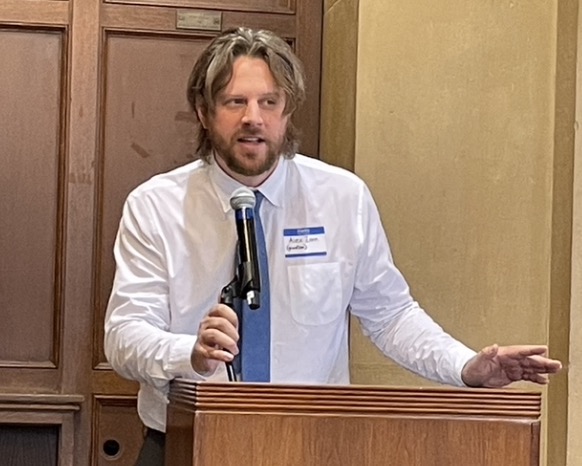
Jens was an amazing grandfather. Always so warm and so fun. And as others have said, whenever we would meet, we would always just chat about anything, He and I would chat about physics a lot. When I was really young, I spent a week with Jens and Fran — we thought of it as “Camp Grandparents” – and I remember he and I sat down, and he said “We’re going to work on a couple of math problems together and create a write up of what we’ve done.”
One problem was, if beans cost $1 each, and peas are 15 cents, how many beans and peas can you buy for $20? And what kind of algebraic formulas could you use? He taught me the Pythagorean Theorem: If you walk three miles west and then four miles north, how far are you from where you started? And also a little practical knowledge, such as if you invest $1,000 in the bank that pays a 5% annual interest, how much do you have after 10 years?
He and I wrote up these problems, and it was just a great experience. This was before I really knew anything about algebra.
I went on to study math and physics in college, and then afterwards to get a math PhD. And through this whole experience, he was very supportive and interested.
I suppose an accomplished physicist talking to his grandson about math and physics is what you’d expect. But he also had very lovely interactions with my now fianceé. She has a podcast based on her business – which is sending nannies or doulas to the homes of new parents – and he became maybe the number one fan of her podcast. He would regularly send her emails about her latest episode and all that he had learned from it, including details of my relationship with her that she had included in those episodes.
He was just such a great person and such a great grandfather, and I will miss him very much.
Ben Zorn
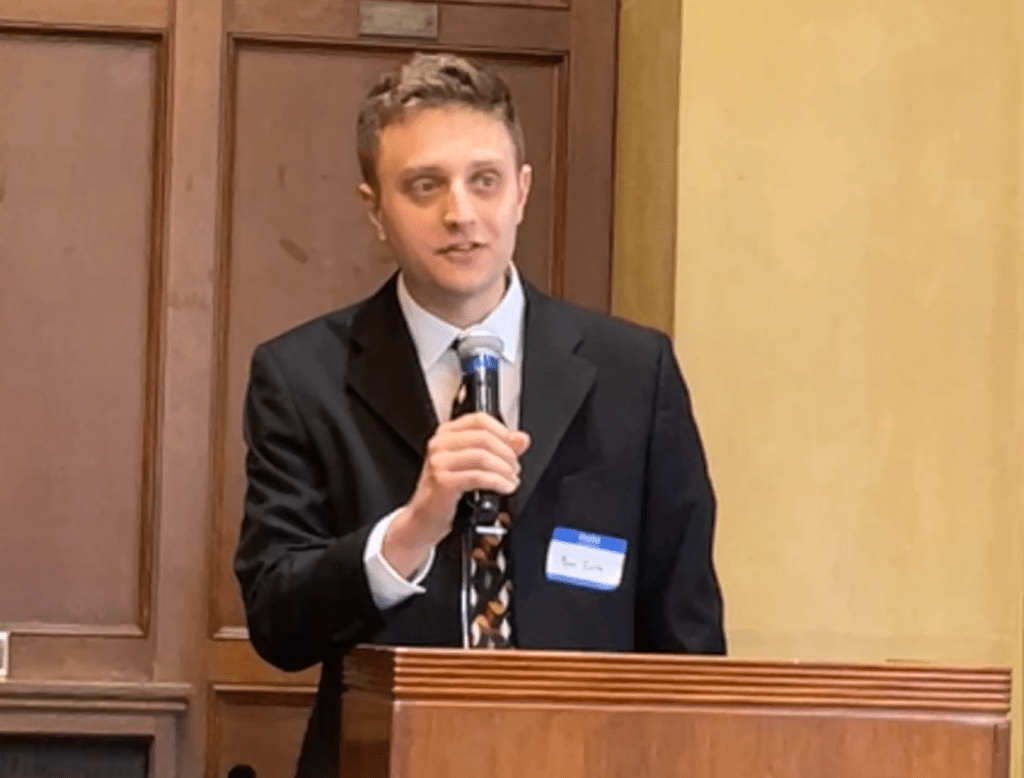
It’s been really special to hear about all the ways that my Opa has touched everyone’s lives, and I know it was different for all of us, just because of how multifaceted he was and how his interests spun all different directions and spanned so many decades and changed throughout.
I particularly remember a project I did in middle school about “the renaissance man,” in which I compared my Opa to Leonardo da Vinci. made a daily schedule for each of them describing how they would engage all their different interests. I showed how Opa was able to fit physics and art and music and family into a full, vibrant, colorful life that he shared with all of us.
He and I did get to experience what I think is maybe the most profound, ultimate, unparalleled expression of shared humanity, which is making music together and singing in harmony. The songs that we sang — the soundtrack to this multi-generational chorus – were these gospel hymns that you heard accompanying the video slide show earlier.
When we’d leave for Chicago on Sunday mornings we never got the impression that they were going off to church afterwards. But even still, these gospel hymns resonated something within us that didn’t even need to be explained. We knew that those songs connected us and bonded us as a family, connected us to a spirit with maybe no name or affiliation.
But those songs always make me think about those Sundays we would spend in Ann Arbor as we were getting ready to leave. We’d wake up that final morning and congregate in that kitchen, I would hear the sizzling of eggs and hot butter in the pan, hear the clattering of little paws on the ground from Molly and Wotan and hear the chatter about news, politics and sports. And the fond memory I have of my Oma and Opa is them standing together in the driveway as we pulled away, hugging and waving goodbye. is us leaving the driveway and them closing the gate behind us and hugging and warm embrace and waving goodbye.
Annie Zorn
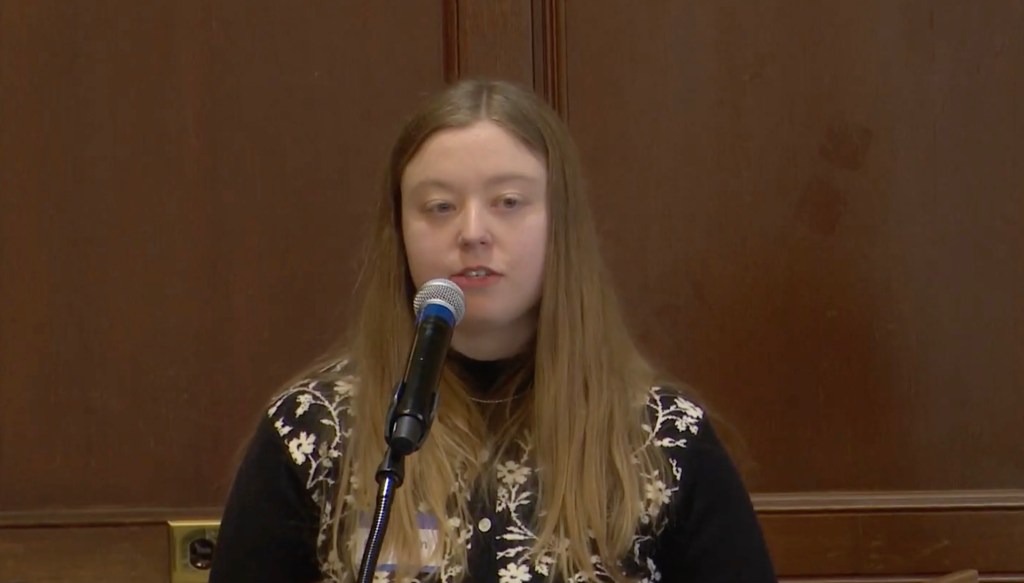
I like to think that each of my siblings and I inherited an important quality of Opa. Alex received a love of math, Ben a love of music, and I received a love of design.
From an early age, I was intrigued by the different artistic projects Opa was working on, from material studies with plastic pipes to paper maquettes of his sculptures and all of the fascinating and unusual objects in their home. Their living room was a mini museum of sculptures, paintings, photography, books and tokens of their lives. One year, we arrived at Christmas to find the tree replaced with a series of sculptures wrapped in twinkle lights.
He was always interested in talking about a design problem, often grabbing a napkin or the back of an envelope to sketch something out. He’d share a new material he was working with in the shop or a new Photoshop filter he was having fun testing out.
A perennial topic of conversation was how new technologies were shaping art and design. His endless curiosity was so inspiring. He unconditionally supported our dreams to pursue our interests. I remember how much I enjoyed getting to share the projects I was working on in architecture school with him, knowing he’d appreciate the results of hours spent in a model shop. I also loved hearing stories about his past. Every time we sat around the kitchen table, there was a new anecdote to uncover. Especially during my more recent visits, when I began to ask a few more questions.
I heard stories about his high school years, his travels a young adult, and early years of his relationship with Oma. He would also share stories of the relatives abroad with whom he kept in touch. I will really miss those conversations.
He was such an inspiring and kind person, I can only begin to appreciate how lucky I was to have known him and been guided by his generosity and wisdom. His memory will continue to inspire me to be curious, to never stop learning and creating.
Karen Zorn
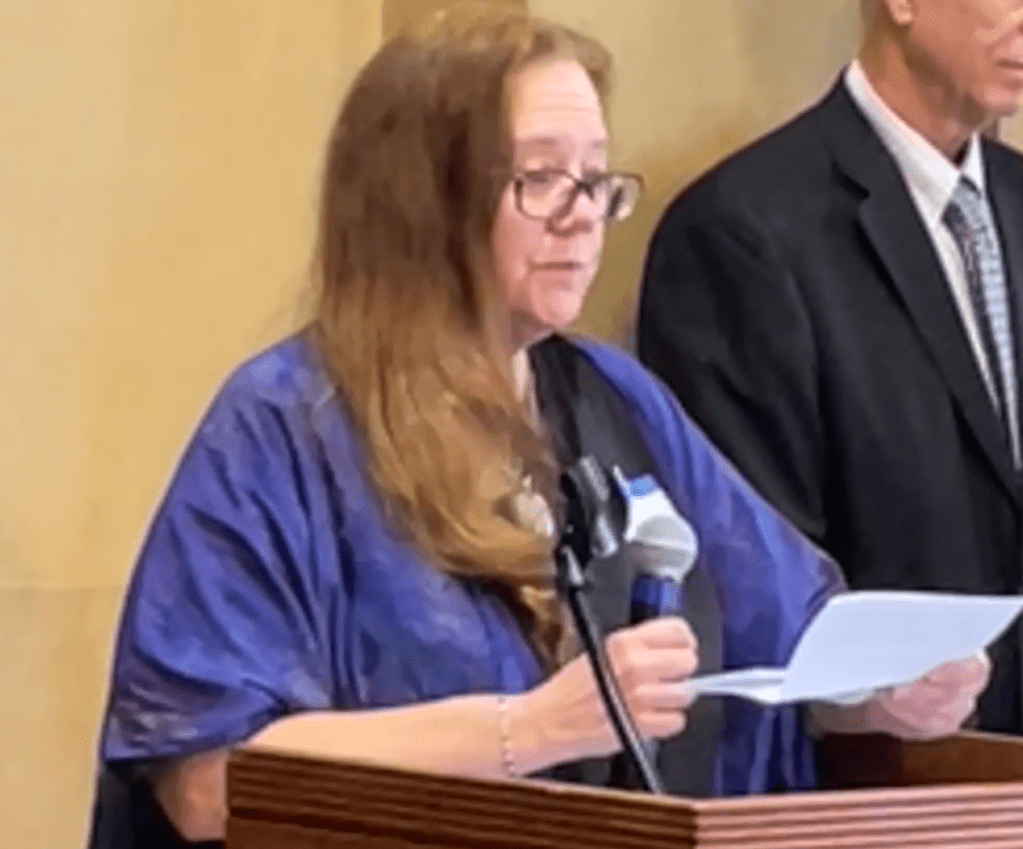
Thank you all very much for coming today. Just by being here, you are affirming what a remarkable person my father was. After all of today’s speakers attesting to his accomplishments and abilities, I really don’t need to repeat those wonderful words. Instead, I would like to reflect on what kind of person Jens was.
One of his most notable characteristics, as other folks have said, was his uncanny knack of making everyone feel seen and feel valued no matter what their position in life. It didn’t matter if a person was a high-ranking administrator, a politician or the folks who worked on the lawn, he had respect and genuine interest in them
As much caring as Jens showed his students, his friends, his coworkers, and even people he did not know very well, that was just the tip of the iceberg of the amount of caring, love and support he gave Fran, Eric, myself and then the rest of the family in later years.
Fathers are supposed to lead by example and guide their children with their words and actions. Jens was, and still is my North Star. He was always there for me.
He never let me down, even now his calm, logical and thoughtful voice is there for me. Many people think that the role of the father is to enforce the rules, administer stern guidance and provide discipline.
Jens was not the kind of father to say “I told you so” when things would go awry. He would simply ask how he could be of assistance, then he would take his time to discuss options with me.
As an example, I once made a decision to quit a corporate job here in Ann Arbor and move to California. After a few years, the situation was just not working out for me, and I needed to come back to Ann Arbor .
Jens dropped everything he was doing and flew across the country to drive with me back to Michigan. He never, ever said anything negative to me about my poor decision making. We just cruised companionably along Route 66, stopping at hilarious, kitschy tourist stops, and feasting on lobby waffles.
Going for waffles was a tradition we kept up for many years.
Jens spent a great deal of time with me throughout my childhood helping me with science and math homework. He used quick hand drawn illustrations to visualize concepts, much like his later sculptures that depict scientific discoveries.
He taught me how to use power tools and machine shop tools. We repaired bicycles, created little statues and played catch and Frisbee. He taught me how to drive a manual transmission. He instilled in me a lifelong interest in art and photography. He encouraged me to freely use his darkroom, which is a place many photographers keep to themselves.
Jens was always interested in and supportive of my endeavors, from having horses to having a professional career at art, I have always been extremely grateful for the life he and Fran have afforded me. Jens was a great father. He was also my friend. For the rest of my life, I will always be asking my North Star for advice and guidance.
Eric Zorn
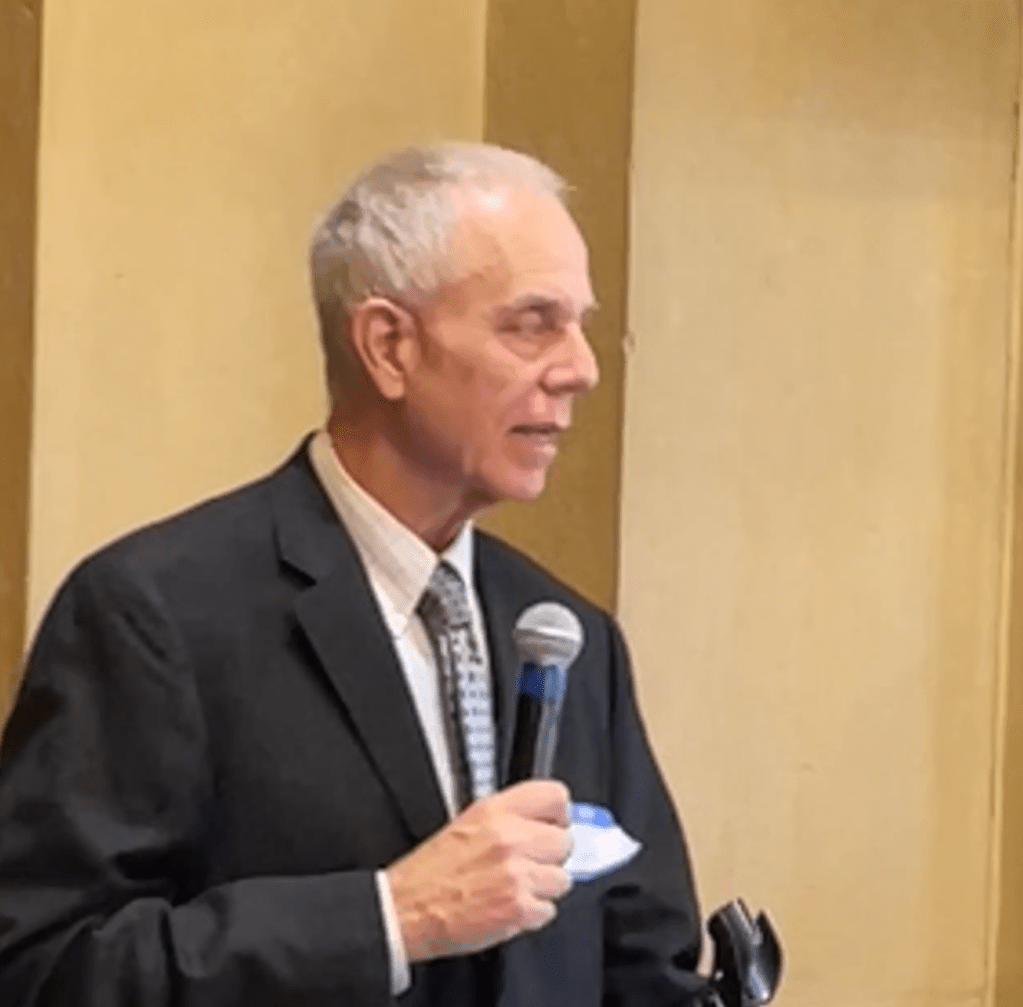
One of the old country songs my father and I used to sing together was “Give Me the Roses While I Live,” a 1925 song popularized by the Carter family.
Give me the roses while I live
Trying to cheer me on.
Useless are flowers that you give
After the soul is gone.
The song is a reminder not to wait for events like this to express our appreciation, our respect and our love for others.
Kind words are useless when folks lie
Cold in a narrow bed
Don’t wait till death to speak kind words
Now should those words be said.
Dad lived by that. He kept in contact as best he could with many of you in this room. In fact, in his final years, he prioritized expressing his affection and regard for others through email and Facebook, lunches and coffee, instead of cleaning out his incredibly cluttered home office, as Karen and I can certainly testify.
Many of you returned that favor and gave him the roses while he lived .He felt appreciated and understood and loved for his warmth and generosity and talents that people have talked about, his accomplishments, his compassion and his genuine interest in others.
He would be flattered and humbled about some of the things that people have said here today and the tributes that Karen and I have received in emails and cards from a lot of people, but he wouldn’t have been surprised, and that’s one of the great comforts that I have as I’ve processed his loss.
He got the roses while he lived, in part because he handed out so many bouquets himself.
His life was as complete as a life can be: 94 years, most of them in good health, razor, sharp mind till the end, and an end that came quickly, but not so quickly that Karen and I could not be by his bed to ease his passage.
He leaves a legacy of artistic and scientific achievement and uncomplicated relationships with me, with Karen, with his daughter in law and his grandchildren, and he leaves with us a knowledge of how lucky we were to have him in our lives.
People have been saying to me that they’re sorry about my loss. And it is hard to process.
But it’s comforting to reflect on how lucky I was, how lucky our family was, and how lucky he was to have gone out after such a long life.
He was a gentle soul. It was so rare for him to lose his temper that I can remember only one time that someone in the family — maybe me in my teen years, we’ll never know –, but someone in the family neglected to clean you out and put away the metal popcorn popper in the kitchen despite his repeated requests.
So then one morning, I came downstairs to find the device crushed and flattened on the counter. And such an act was so out of character for him that it was a family joke to reference the popcorn popper whenever we had a disagreement with him for years to come.
He was very generous with his time, as Karen points out, and others have said, I didn’t have his brain for math and science. He sat with me many nights in high school, going over my homework, never giving me answers, but always prodding me along with questions, asking me to stop and consider all the wrong assumptions I was making
. And he was very devoted man. This last decade or so with Fran has been heartbreaking, but he never stopped trying to engage her with card games, with the most simple interactions you can have with someone who is mostly lost to dementia, or simply to comfort her as her lights were going out.
He never stopped trying to repay the great debt that he felt that he owed her for the life that she had given him.
Much of him does live on. I didn’t inherit his STEM talents, which he got probably from his father, who was an accomplished mathematician. That skipped a generation, went on to Alex, who got his PhD in math.
His artistic ability. Karen has inherited as has Annie who is now an architect. His musical talents and interests live on in me and in my son, Ben, with each generation more accomplished than the last.
About music. His father played a bit of classical guitar. Jens picked up the instrument himself during the so called folk scare of the late 1950s and early 60s. One of my earliest memories was going to Yale grad student department sing alongs in New Haven as a toddler and falling asleep on piles of coats in the bedrooms to “The Worried Man Blues,” “John Henry,” “They Call the Wind Mariah” and other hits of the day.
Dad bought a banjo and a mandolin, and we moved to Ann Arbor, but he honestly never got his fingers around those instruments. I did eventually, as they were around the house, so I dabbled with them, with my inspiration to practice coming from hearing him and three friends rehearse and perform around Ann Arbor as “The Bloodwashed Throng.”
It was a country gospel group for which he sang tenor and played the harmonica. The joy these four friends had playing and singing together, the camaraderie, the fellowship, the laughs, it was captivating to me. None of them was particularly religious, but they resonated, as I do, with the power and the beauty of the lyrics, the hope, the joy, the understanding of life as a journey, and the occasional thunderous warnings of doom.
I learned almost their entire repertoire, and Dad never said no when I’d asked him to play and sing with me when I was in high school, he took me along on several of these residential college student trips to Berea, Kentucky that David talked about. They studied the impact of technology on Appalachian culture, and it was there that I was exposed to old time string band music that became my lifelong hobby.
So when Ben was in high school, I took him to Berea to feed his growing interest in traditional American music, and there, he made a connection with the director of the string band ensemble at Davis & Elkins College in West Virginia. He ended up with a scholarship to play old time music, which, It’s fair to say, changed his life. He met his wife, Cori, at Davis & Elkins. He now plays in several bluegrass bands and teaches music full time at a Chicago elementary school.
Dad and I continued to sing the old songs together at every one of my monthly visits to Ann Arbor, sometimes for hours around the kitchen table, each song conjuring up precious memories to borrow one of the titles of the tunes.
It was close to 40 years ago that I was last in this room, and it was for a celebration of the life of Bill Williams. He was a U of M physics professor, fellow member of “The Bloodwashed Throng.” He was just 49 when he died in a private plane crash. Dad spoke at that event. He closed by recalling the words to one of their numbers, a song about souls reuniting in heaven, called, shall we gather at the river? Yes, he said, Yes, I had always known that we shall. but I just didn’t know we would start so soon.
40 years ago
Jens was the last surviving member of that group. Bill Pierson died in 2000 Bob Lewis died in 2017.
So I want to close today by singing a bit of that song together. Ben’s going to play the fiddle with me. The words are in your program. I want to bring up the daughter of Bill Pierson and the wife and daughter of Bill Williams. Come up and stand here and sing along with me. This guitar used to belong to Bill Pierson, and I’m honored to play it.
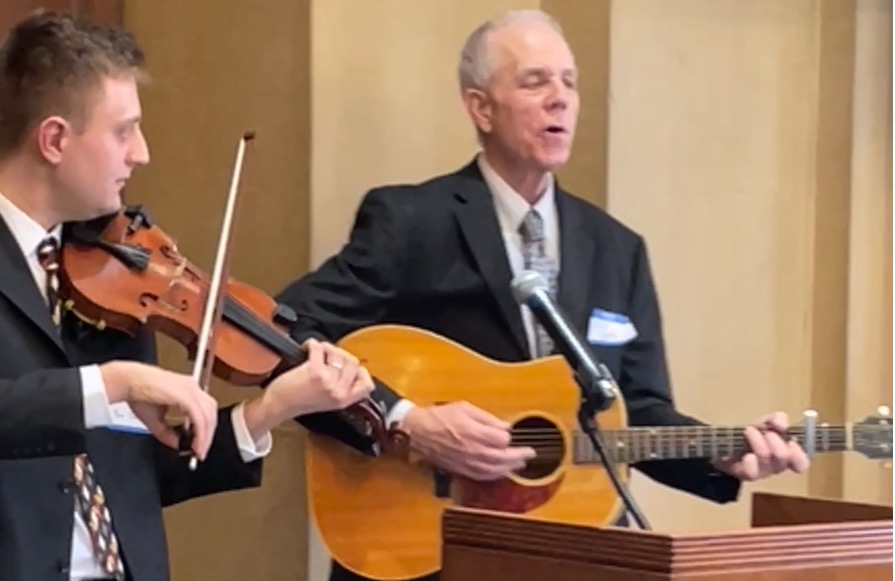
Chorus:
Yes, we’ll gather at the river,
The beautiful, the beautiful river;
Gather with the saints at the river
That flows by the throne of God.
Verses:
Shall we gather at the river,
Where bright angel feet have trod,
With its crystal tide forever
Flowing by the throne of God?
Soon we’ll reach the shining river,
Soon our pilgrimage will cease;
Soon our happy hearts will quiver
With the melody of peace.
Excerpts from additional tributes
Jim Allen
We have all suffered a great loss. Jens was like a tall oak
supporting our physics department. I hugely admired and respected him as a physicist and as a friend.
Phil Buxbaum
(of Stanford University, writing on behalf of himself, his wife Roberta Morris, Stanford Professor David Reis and Michelle Young a former administrator in the Michigan Physics Department)
Jens was a dear friend of ours. He was also an accomplished experimental atomic physicist, and a significant friend, mentor, and colleague to decades of students, postdocs, and faculty at Michigan. Jens’ long presence in Randall Laboratory helped to create and maintain a Michigan culture in atomic physics stretching from the era of Otto Laporte and Dick Crane to Peter Franken and Gaby Weinreich, to Art Rich, Bob Lewis and Dave Gidley as well as Bill Williams, Bill Ford, Carl Wieman, Tim Chupp, our own ultrafast FOCUS center, then to Chris Monroe and Georg Raithel, with their developments in quantum computing.
A celebration of life is most appropriate for Jens, because his greatest contribution in recent decades was the department Chronicler-in-Chief, celebrating Michigan Physics with written histories, anecdotes, photographs, and of course his wonderful sculptures. Indeed, Jens Zorn’s art has become his most visible and perhaps most enduring contribution to science.
We all feel that Michigan would not have been the same without Jens. So celebrate your hearts out today; Jens would.
Roy Clarke
Jens’ deep humanity and guidance throughout my long career in Ann Arbor made Michigan a very special place for me. It was an incredible experience to work with Jens and David Crosby on the Elmer Imes memorial over the past few years. He will be greatly missed as the soul of our illustrious department. May he rest in peace.
Jeff Clevenger
Jens’ help and mentorship was instrumental in my putting together my first one-person photo-exhibition. His example of working creatively and successfully in sculpture after retirement from being a physics professor is admirable, remarkable, and a model no doubt for many, as it is for me. I feel so fortunate to have known him and for hearing his insights into photography, especially his specialty, portrait photography
Denis Donnelly
Jens was a fine man and a good friend to me. We first met when I was a graduate student. At some point during that time he asked me to do a postdoc with him. Once my degree was completed, we worked together for a little more than two years. In some ways that era was the happiest of my life, both in terms of work and in my personal life. He was not just a colleague, but a true friend to me and I shall miss miss miss him.
August Evrard
Jens was a remarkable man who I and many others admired for his integrity and his breadth of interests and talents. He left his mark here in multiple ways, and I’ll think of him every time I walk through the sculpture garden.
Sally Fekety
I and my whole family loved your father very much, and I am so grateful to have had him and Fran as neighbors for such a long time. His kindness when both of my parents died was immeasurable, and I he was a great source of support. I have so many memories of wonderful conversations with him about this, that or the other interesting thing. The whole neighborhood mourns,
Elisa Frye Jr.
I find my own world sadder and lacking without both Fran and Jens. There is a false belief floating around that Scientists are narrow- minded people who know little of anything outside their fields of endeavor—how wrong that idea is! Jens proved that every day of his life with his music and writing and sculpting, and the endless personal encouragement he also gifted so generously to his students
David Gerdes
Jens was a dear friend and colleague for almost 30 years, and one of the kindest, most genuine people I’ve ever had the privilege of knowing.
Louis Guenin
The virtuous, inspirational Jens was a cherished force for good in the world. His cheerful disposition and voice assured that every conversation that we had was fun.
Hearing mention at the Celebration of Life that he was not explicitly religious, I reflected that by his kindness, his respect for people of all rank and station, his active engagement in helping others as teacher and as father and as husband and as friend, and by the many other good deeds that were his norm, he unquestionably lived a life of virtue satisfying the highest aspirations of Christianity, Judaism, and of just about any religious faith we know. Reflecting on this inspires trying to emulate him. I’m hoping that if we do see Jens agai it will be in the virtual Michigan Stadium of the hereafter (sans skyboxes), seated on the 50-yard line, with every game a Michigan victor and with every puzzling physical phenomenon, and unsolved mathematical problem, understood and solved.
Paul Guttman
I have many fond memories of working with your father on sculpture projects at the University. I witnessed his collaborative approach to art while working with his favorite welder, Josh Blackmon. Your dad knew what he wanted to look like when the sculpture was completed and he used Josh’s knowledge to find a solution to make it happen. He was a joy to work with and one of my favorite educators on campus.
Nancy Hartrick
As gifted, talented and intelligent as Fran and Jens were, they were every bit just as kind, generous, curious, caring, genuine, humble and interested in others. They were always b promoters and developers of others, inspiring people to be the best they can be. They always had a strong sense of right and wrong and kept a positive outlook. I am grateful Jens lived as long as he did, and grateful for his many and varied accomplishments which are enduring and timeless. He touched countless lives and the positive impact through his wisdom, caring, and genuine interaction with people, will live on for years and years to come through stories and memories.
Barbara Hollstein
A deep hole results from Jens being quiet. The combined presence of Jens and Fran was a foundation for what my family has continued to build. Jens continues in our journey, in our time, and in our hearts. May you and your family find comfort in the continuing impact from his presence
Geoff Larcom
When I covered U-M for the AA News, Jens would often share thoughts with me on email about various issues, including the need to report W-2 earnings vs. just straight departmental compensation in our annual U-M salary report. So right was he, as he noted what various doctors make from clinical practice, etc. Jens just wanted a more accurate portrait of university structure.
He and I had a good deal of exchanges when he served on SACUA (Senate Advisory Committee on University Affairs, a beloved acronym), a true dose of academic service on his part. He would often include me on emails as he shared his impressions du jour, always asking, ever curious, “What do you think?”
What stays with me is the sincerity of Jens’ interest, a focus he applied to so many things outside of himself. Jens was a marvelously externally based man in my book – ever engaged with his friends, colleagues and family in so many ways.
Lu Li, interim Physics Dept. chair
Jens came to UM in 1962 and helped build our department into an internationally renowned center for the study of atomic and molecular physics. He mentored countless students, and together they performed groundbreaking precision measurements of atomic polarizabilities, molecular structure, and nuclear shapes using molecular beam methods, including the first observation of individual molecules absorbing photons at sub-kilohertz frequencies. Their experiments on metastable atoms and molecules created by the impact of low-energy electrons revealed a previously unobserved state of molecular hydrogen and demonstrated a novel way to produce and trap ultra-slow atoms and molecules. His experiments on the electron-proton charge difference ruled out theories that had proposed electrostatic force as a mechanism for the expansion of the universe.
Fritz Lieber
Jens was devoted to family, supporting anyone who needed it . His grace, good humor, intelligence and kindness are a model. Genius runs in the family but perhaps even more meaningful, he was genial.
Molly Motherwell
I will always remember Jens for his kindness, compassion, empathy, and his smile. I’m honored to have known him.
Ellen Murphey
A striking memory I have of Jens: He came over to our house the day after he and Fran had visited the evening before, in the garden. Fran was missing an earring and he came to look for it, systematically plodding back & forth across our fairly large yard, bent double, for what seemed like hours. I remember thinking, “So that’s what love looks like.” It has stayed with me ever since.
Michelle Oberman
From a distance, I had the gift of being able to remember him as he was during the weeks we spent together at Michigania: Smiling, engaged, open, curious, brilliant, unpretentious, laughing easily and often. These memories have turned him into a model for me. As I contemplate what it looks like to live and love fully in all the seasons of life, I feel blessed to know it is possible. I point myself in his direction and pray for the strength and the courage he had.
Alison Overseth
I knew Jens as our neighbor and Oliver’s colleague of course. But I really felt blessed that we had a separate relationship via Facebook in his later years — I LOVED his sculpture.
Aaron Pierce
When I came to Michigan as a new faculty member in 2006, he was extraordinarily welcoming. And when it was more of a departmental tradition, I enjoyed daily conversations over afternoon tea with him. We shared an interest in physics history, and I was struck by and inspired by his pride in the history of the Michigan physics department. Occasionally, when he was cleaning out his office, he would pass along a book of historical interest, which I now proudly have on my shelf
Keith Riles
I’m very sorry to learn of Jens’ passing. I have had enormous respect and admiration for him ever since coming to know him 30+ years ago. He was a precious gem, a person I always looked forward to speaking with.
Janet Hegman Shier
I am so sorry that the world lost Jens. He was such an amazing man–such an incredible thinker, artist, photographer, innovator. He was a true colleague, who was always so supportive, and he was someone whose ideas I always wanted to hear. He was generous and inspiring.
Duncan Steel
I first met Jens at a conference in Vancouver back in 1983 or so. What a fantastic human being. I have always felt very fortunate to have known him and worked with him. He was a giant in so many ways .
Joan (Velten) Staples
I would like to add a brief tribute to the celebration for Jens. Unfortunately I am not able to attend the Celebration in person due to the illness of my husband, Alan.
My association with Jens was through the family friendship between his family, the Zorn’s, and my family, the Velten’s. My first recollection of Jens was when he took photos of me playing the cello when he was probably around 16 and I was in the 4th grade. My mother commissioned him to photograph this milestone in my life. We have those photos in a scrapbook at our home in Florida.
When I was eight years old, Jens drove our whole family along with Alice and Liz to Chicago to visit my aunt and uncle. Later, we all went to a cottage in Muskegon, Michigan on Lake Michigan where we went several summers of my young life. I think Jens must have been about ready to go in the service at that point.
I know Jens went into the service after graduating from high school. After returning to Bloomington he married Fran. I was a young teenager at the time and was thrilled to be invited to the wedding reception.
My next memory is of Jens along with his wife, Fran, bringing first his son Eric and a bit later his daughter Karen to introduce them to our family in Bloomington, Indiana. We probably played that game that Max, Jens’ father, invented called graduate high school, while drinking martinis.
Alice Zorn, Jens’ mother was the first person to give me German lessons at age eight and taught me lifelong principles of the German language which I still remember to this day.
I will always cherish my memories of my place in the family friendship between the Veltens and the Zorns. Much of it centered around my association with Liz Zorn, Jens’ sister. She and I were good friends throughout our childhood and young adulthood. I visited her in her assisted living in Spencer, near Bloomington Indiana.
I saw Jens one last time in Ann Arbor when I attended a church conference there during the late 1980s or early ‘90s. I had dinner at their house and was welcomed with great warmth.
I hope we can all take comfort from our memories of great times of camaraderie and laughter with Jens and his whole extended family.
Paul Thurmond
From the moment I started my job at the U, Jens made me feel welcome and appreciated. I enjoyed all of our conversations, as they were always engaging. When we were done talking I always went away either thinking about what had been said or I had learned something. I’m very thankful that God put Jens Zorn in my life. He enriched it in so many ways and he never knew he did it.
Katherine Towler
Jens was an amazing teacher and a presence in my life these last 20 years, since we reconnected at a Residential College reunion. His messages of encouragement and support, his delight in seeing who I had become and where my life had taken me, have meant so much to me. Jens was such a generous person, always interested in others and what he could learn from them. I learned a great deal from him.
Candace Wayne
I recall him fondly from many occasions and in peculiar when he walked around the UM campus when I visited with Leahruth. His scholarship was matched by his kind soul and his love for his family.
Manny Zervos
I came to know Jens and Fran quite well over the past 4 decades! I was fortunate to benefit from Fran’s exquisite editorial skills and loved Jens’s scientific mind, keen photographic eye and the example he set for how to live one’s life and be a good husband.
As we say in the Greek Orthodox tradition – may we each live a long life so that we can honor his memory.
 Eric ZORN
Leave a comment